NEWS | SOFTWARE | SHEET
How to Calculate the Height of a Building
What is the Standard Building Floor Height?
While designing a home, it is important to make decisions about the floor-to-floor height of the building structure. In the standard building structure, the vertical distance between the finished floor of one level and the finished floor of the level above should be maintained properly.
In the case of the residential building structure, the standard floor-to-floor height should be 11 feet. This height is ideal to get a clear ceiling height of 10 feet 2-3 inches, after accounting for the thickness of the slab, flooring, and also for the treatment of the ceilings. This standard height works well for all kinds of habitable floors, including the basement part of the building structure.
The 11-foot height is ideal for the residential building structure, as it helps to create a comfortable and spacious feeling in the building without wasting any vertical space. This standard floor height also helps to support the efficient air conditioning systems, for example, split and cassette units. By making an 11-foot floor height of the building structure, the basic ceiling lighting works more efficiently without any kind of light loss. The 11-feet floor height of the building structure helps to make standard 8-foot doors and windows, which helps to get a more proportionate and well-balanced appearance of the building structure.
Discuss the Common Range of Heights for Different Types of Buildings
- In the case of the residential building structures, the height will be about 8 to 10 feet per story.
- In the case of the commercial building structures, the height of the building will be about 12 to 15 feet per story.
- On average, the floor height should be about 14 feet per story.
These are the common ranges for the building structures, though the actual height of the building can also vary quite a bit. In the case of the older homes, the floor height can be closer to 8 or 9 feet per story. On the other hand, the floor height of the office buildings, hotels and luxury developments has exceeded 15 feet on some levels. In these cases, the floor height has been increased due to the taller ceilings of these buildings, having larger lobby spaces and also for the added mechanical systems in these building structures.
Learn about the Factors that Influence the Height of Buildings
The height of the building structure has been measured on the basis of the floor-to-floor height. This helps to indicate that the one-story building includes the usable structural, mechanical and interior spaces between the levels. Several factors that influence the height of the overall building structure, that are as follows:
The ceiling height of the building
The ceiling height of the building should be clear so that it can be seen and properly usable by the people.
Thickness of the floors
The accurate floor thickness helps to maintain support between one level and the next level of the building structure.
Mechanical systems of the building
Several mechanical systems, including electrical works, plumbing works, HVAC works, sprinkler works and cabling works, also significantly influence the floor height of the building structure.
Building materials
Several building materials, for example, steel materials, concrete materials, masonry items, or wood items, can also influence the design limits of the building structure.
Building purposes
Different types of buildings, including offices, homes, hotels and skyscrapers, have been used with different floor-to-floor standards.
The wall and story height of the building structure has been influenced by several building materials, for example:
- The wood wall framing affects the max story height of the building, which is about 11 feet, 7 inches.
- The masonry walls affect the max story heights, which is about 13 feet, 7 inches.
- The cold-formed steel wall framing influences the max story height of 11 feet, 7 inches.
- The structural insulated panel walls affect the max story height of 11 feet, 7 inches, whereas the insulated concrete form walls influence the max story height of 11 feet, 7 inches.
Understanding the Process of Calculating the Height of the Building Structure
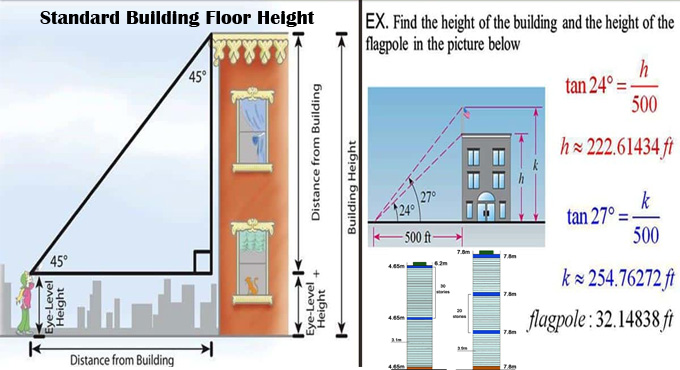
The height of the building structure has been calculated from the finished grade that has been located within 2 feet of the foundation wall to the highest point of the building structure. While calculating the standard height of the building structure, it needs to identify the highest point on the building and also needs to exclude the architectural elements of the buildings, for example, flag poles, chimneys, skylights and others, and after that, a line needs to be drawn parallel to the finished line grades on the elevation plans. The building height refers to the vertical distance between the highest point and the finished grade of the building structure.
A simple formula that can be used to calculate the total height of the building structure, which is Total height of the building = the number of stories in the building * the average height per story On the other hand, the contractor can also use the story height calculator to calculate the height of the building structure on the basis of the number of stories and the type of the building's structure.